Team
KAIZUNO® strengthens organizations and their people from within.
People raise children, build houses and organize adventure trips. They make important decisions and carry a lot of responsibility. They don’t leave these abilities at the reception desk in the morning. These are the people we make KAIZUNO for.
We trust everyone to develop themselves and their organization. Whatever their position or age, they can and want to make valuable contributions. We see it every day.
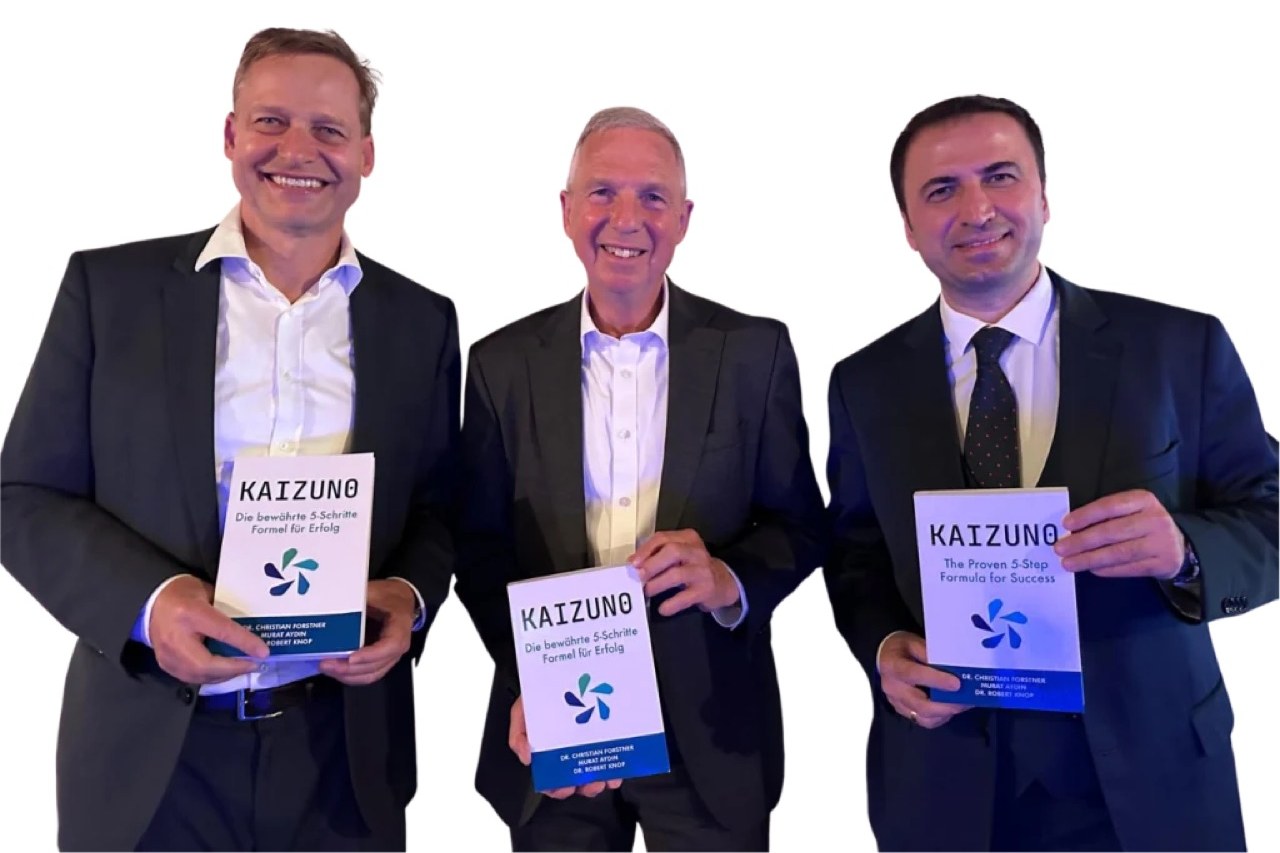
The people behind KAIZUNO
Dr. Christian Forstner
The Discoverer
Nuclear physicist, organizational developer and co-founder of KAIZUNO
Success has a pattern. I found it over 30 years of working with organizations around the world: the five steps KAIZUNO is built on—an approach that stays understandable even for complex tasks.
More about Christian
At a nuclear power plant, people from many disciplines and countries work together. Countless technical details have to fit. Decisions have far-reaching consequences. After my doctorate at ETH Zurich, I helped develop such plants as a nuclear physicist at Siemens.
Perhaps that is where my wish to make things simple comes from. The more complex a task, the clearer it must be what matters and who contributes what. Simplicity has to be earned.
I like to take complex questions apart. I’m interested in what connects to what, and whether a thought holds up logically. That often gets me to the core quickly. For me, explaining something so that others can follow it is part of understanding it.
Later, whole organizations became my field of work: at Siemens, I was responsible for Business Excellence in power generation. For around 30 years, I have been supporting and assessing organizations in Europe, Asia and the Arab world. They include craft businesses, hotels and educational institutions as well as religious organizations, public administrations and international industrial groups.
As a consultant, I accompanied five organizations on their way to the Global Excellence Award, an international prize for outstanding management. Over the years, this let me study again and again what successful organizations have in common.
I am especially proud of discovering the five KAIZUNO steps. Today the approach is embedded as a management model in organizations worldwide, for example at the dental company GC Europe.
For me, it holds the essence of decades of experience. Passing it on so that others can work with it means a lot to me.
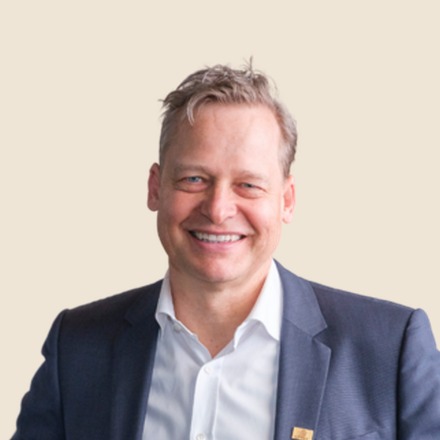
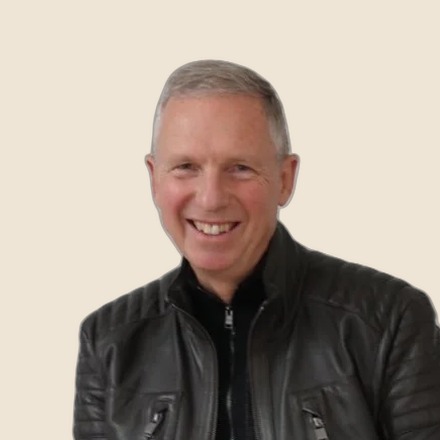
Dr. Robert Knop
The Transformer
Entrepreneur, organizational developer and co-founder of KAIZUNO
Think it through first, then make it work. I have advised organizations, invested in them, led them and assessed them—today I build the digital KAIZUNO system, day by day, together with AI. My yardstick is simple: teams solve their issues themselves.
More about Robert
At a building materials dealer, purchasing, warehouse and sales have to fit together. While still a student, I introduced SAP R/3 there across the board: I analyzed processes, did my own programming and trained the employees on the new software. Even then, I was drawn to thinking something through and then making it work myself.
When someone tells me about something, the data model is already running in my head. I usually see quickly how things could be done differently—and then I want to test whether the idea holds. For that, I dig deep into technical details. For me, creativity needs a solid foundation.
I gained the tools for this during my studies, which took me from Germany to the USA and to Austria. My doctorate was on the success factors of strategic networks of small and mid-sized companies—no coincidence: today KAIZUNO is exactly that, one large cooperation.
Seven years of large strategy and IT projects at the international firm Accenture followed.
Then I switched sides: private equity. I examined more than a hundred companies—and took on responsibility in two of them myself. At Adcubum, a Swiss software company for insurers, I built up marketing and sales as a member of the executive board; today the company is the market leader in Switzerland. At the railway supplier SBF, during its turnaround, I took on the roles of CEO, CFO, CIO and head of HR one after another—anyone who travels by train often still sits under its luggage racks and lights today.
At the renowned Swiss firm Zühlke Engineering, I then built up and led the Digital Transformation unit. One constant runs through every stage: organizational development—for more than 25 years, in more than 100 projects.
As an excellence assessor, I have assessed organizations from car plants in China to the Swiss Army, and for years I sat on the foundation board of ESPRIX Excellence Suisse, the Swiss excellence award. Today I also support organizations as a certified coach of INQA, the German federal initiative for better work (Initiative Neue Qualität der Arbeit).
As a consultant, you develop proposals. As an investor, you check whether they hold up. As a managing director, you decide and live with the consequences. As an assessor, you recognize what makes an organization strong. And as a developer, you end up building it yourself. For me, these five perspectives sit close together—and that shapes how I approach tasks.
At KAIZUNO, it all comes together for me: I lead our IT team, shape partnerships, support organizations—and build the digital solution myself. Every earlier stage gave me something for this. KAIZUNO is self-funded; we are free to decide what is good for our customers.
As different as those stages were, they taught me to bring perspectives together. And one thing was there everywhere—humor and joy in the work.
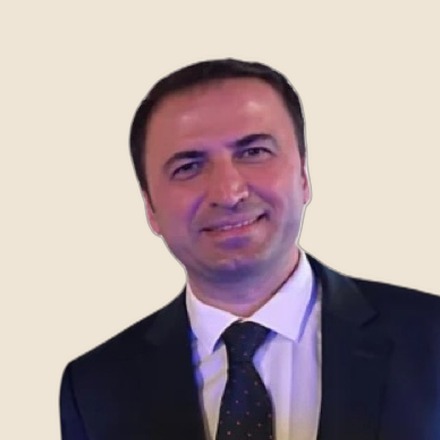
Murat Aydin
The Connector
Industrial engineer, organizational developer and co-founder of KAIZUNO
Quality means you can rely on it. I learned that with medical devices and helped shape the path to a Global Excellence Award. Today I lead Excellence Talks—more than 600,000 people follow the community.
More about Murat
A medical device has to keep its promise. People rely on it. At GC Europe, the European arm of a Japanese dental manufacturer, I worked on exactly that for many years—first in quality management, finally on the executive board.
Anyone responsible for quality management at a Japanese manufacturer for a long time has to be precise—all the more so in medical technology. That suits me: looking closely, asking questions, seeing things through carefully. Over the years my view widened—from the single product to how the whole organization works together. And for me, quality doesn’t stop at the product: it shows in whether people can rely on one another.
My own path took me from Turkey via Poland and Germany to Belgium, where I live with my family today. Finding your way in a new environment means getting to know people and their habits. Since then, international cooperation has been part of my life.
In 2019, GC Europe won the Global Excellence Award, an international prize for outstanding management. I played a major part in shaping that path. Behind such an award are many people and daily work on countless details.
I built Excellence Talks together with Christian. It brings together people from very different organizations. I’m interested in what they have experienced—and who could learn from it.
In conversation, I often think of someone who could help with a question. Then I make the introduction. Turning a first encounter into a reliable connection comes naturally to me.